
The aviation industry has transformed from a once unreachable dream to a necessity deeply integrated in our society, but this technology comes with the hidden risk of Cosmic Ionizing Radiation (CIR). Originating from solar partial events and deep space, CIR poses a significant occupational hazard to professions that frequent high altitudes. This topic deserves attention for the heightened threats of cancer, cardiovascular disease, and reproductive risks that come with consistent exposures.
For aviation professionals that their loved ones, these stakes are deeply personal. My research determines that while these risks are intrinsic to the job, they are often poorly communicated. My magazine article aims to avoid "mass panic" and instead encourage educated awareness. By detailing the physiological impacts of CIR, this project advocates for more robust protective guidelines to ensure the men and women who connect our world are not doing so at the cost of their long-term health.
Research Phase
Before the start of this phase, I was guided to choose data-based articles, journals, and books. This led me to focus on data from the National Aeronautics and Space Administration and the Federal Aviation Administration, which have been published on radiation originating from space and/or affecting people. Most of the information is universal, but most of its references pertain to the U.S. or Europe. Along with those main sources, I chose to focus on academic journals that would go into greater detail on topics within CIR and include their own data.
Impactful Resources
What Aircrews Should Know About Their Occupational Exposure to Ionizing Radiation
Wallace Friedberg, Kyle Copeland
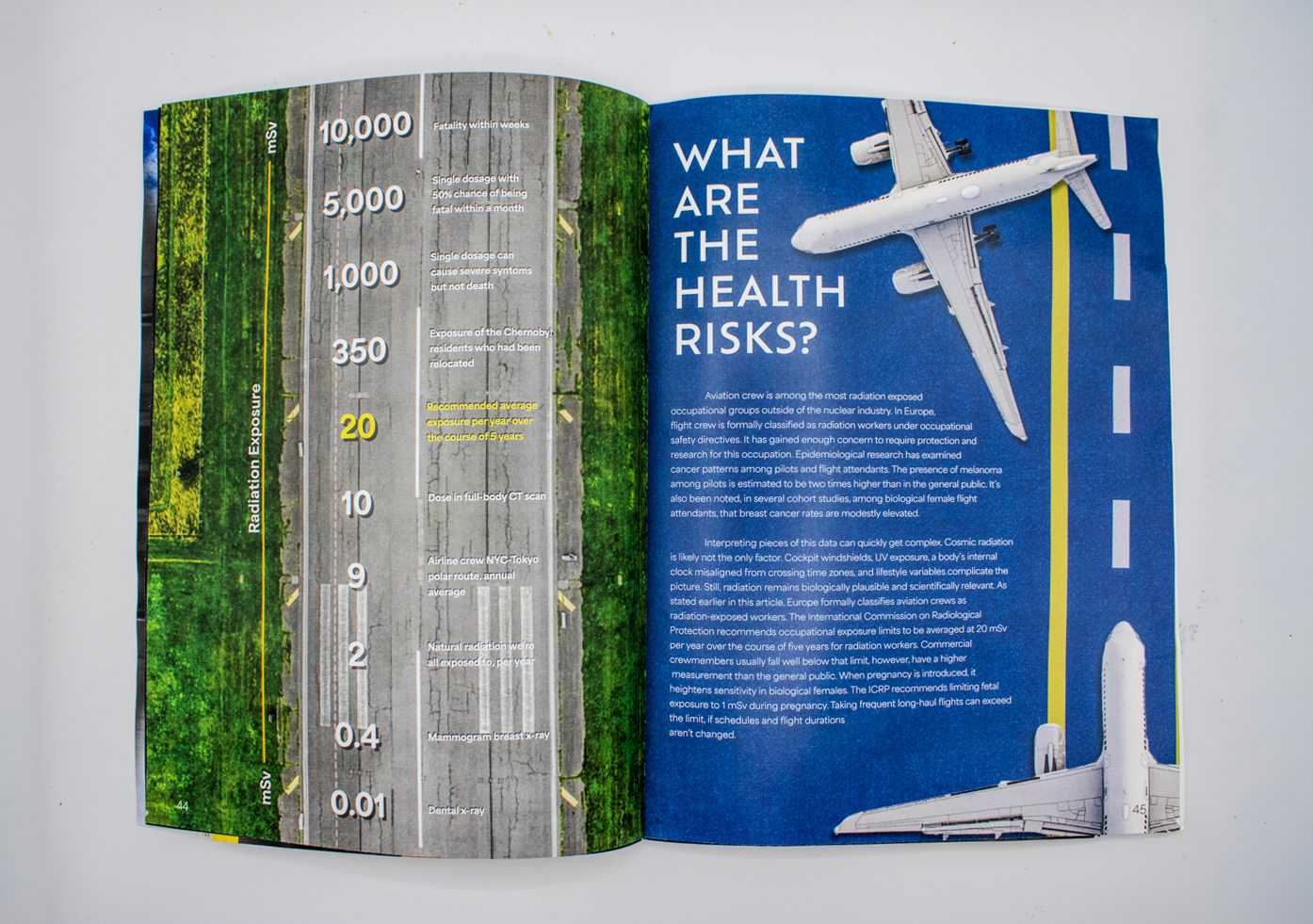
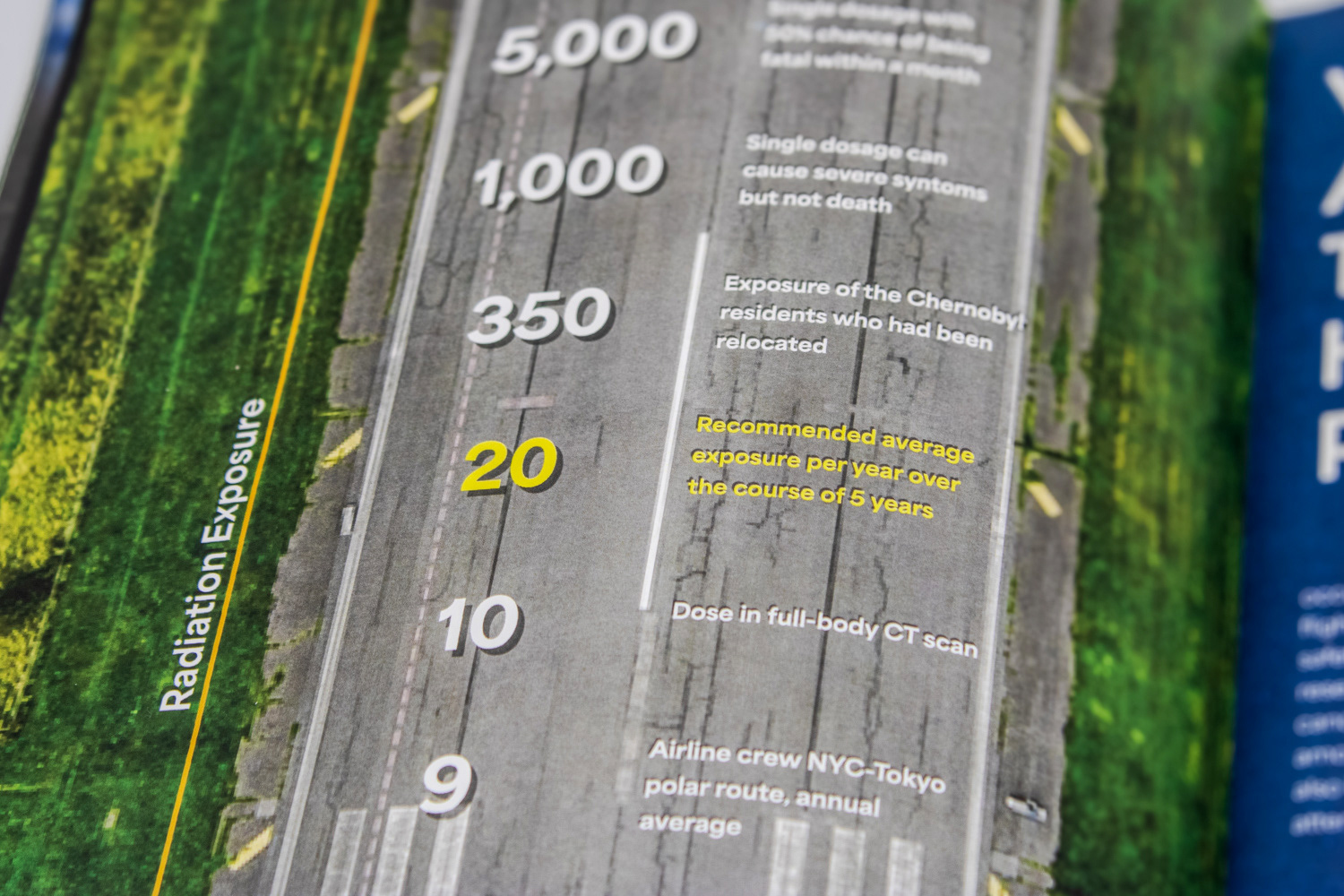
In this report, while focusing on Galactic Cosmic Radiation (GCR) was a great resource to use to get more information about the scientific process of cosmic radiation. Additionally, it also highlights the health concerns regarding fatal cancer, genetic defects for future generations, and prenatal risks. It provides in detail data about radiation doses, millisieverts (mSv), per year in both general and pregnant aircrew.
Radiological Protection from Cosmic Radiation in Aviation
J. Lochard, D.T. Bartlett, W. Rühm., H. Yasuda, J-F. Bottollier-Depois
This International Commission on Radiological Protection (ICRP) Publication focuses on the preventative measures from cosmic radiation in aviation, specifically addressing aircraft crew and frequent flyers. It highlights how different programs should be in place to properly educate aircraft crews through educational programs, recording individual doses, and adjusting flight rosters when doses reach alarming levels. It was a great article to further learn about how measures are and could be taken to protect different types of people aboard a flight.
Applied Research in Design
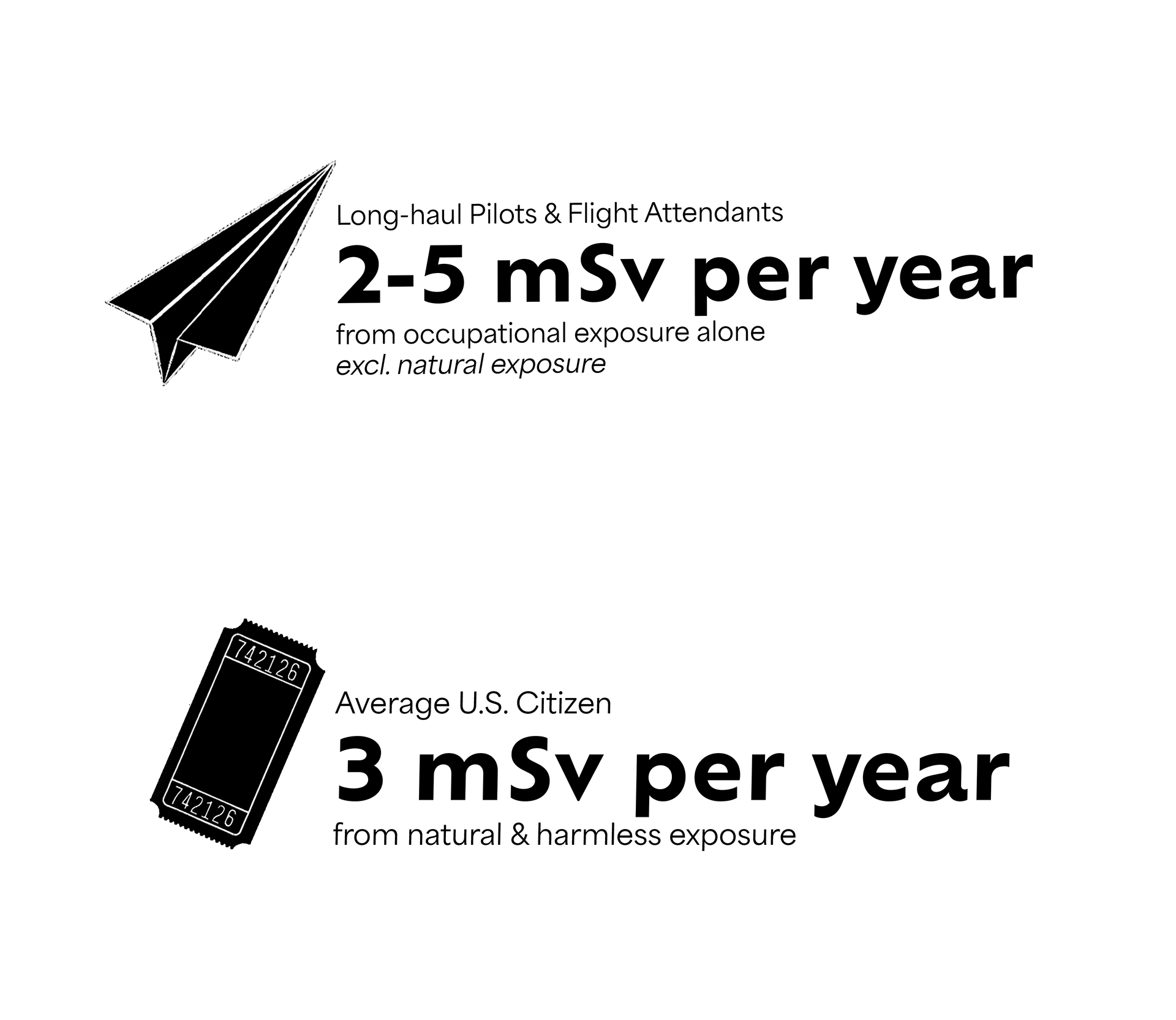
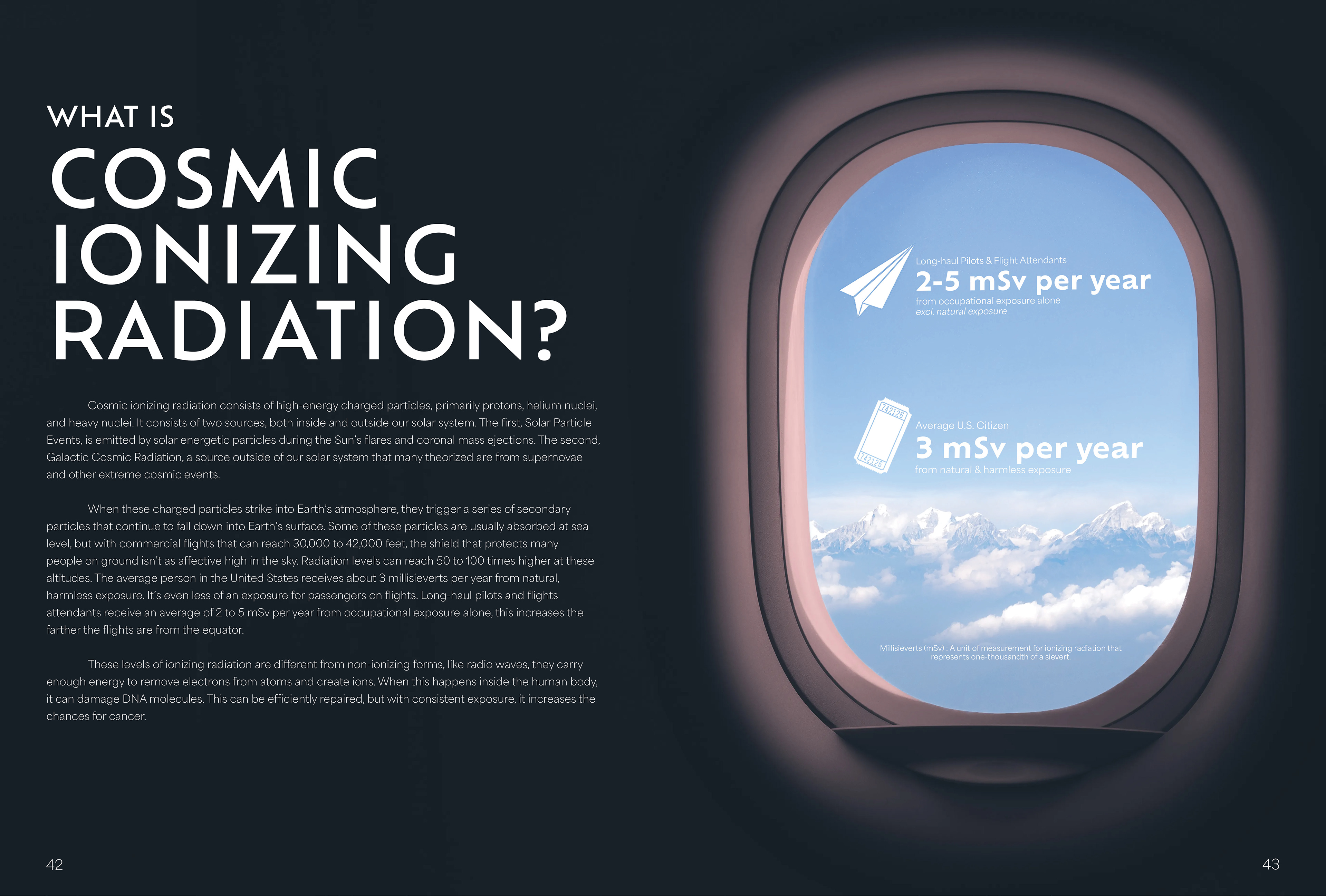
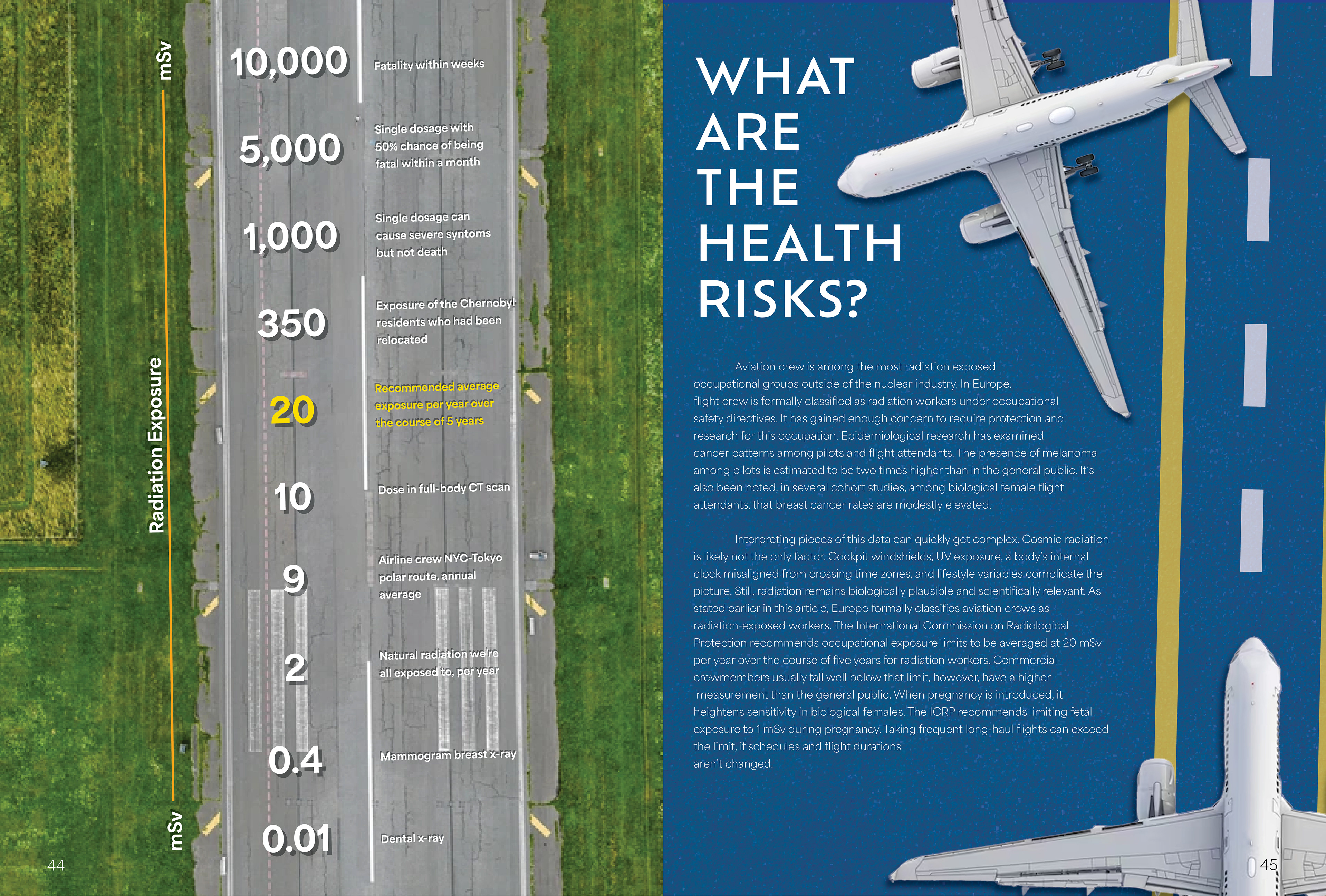
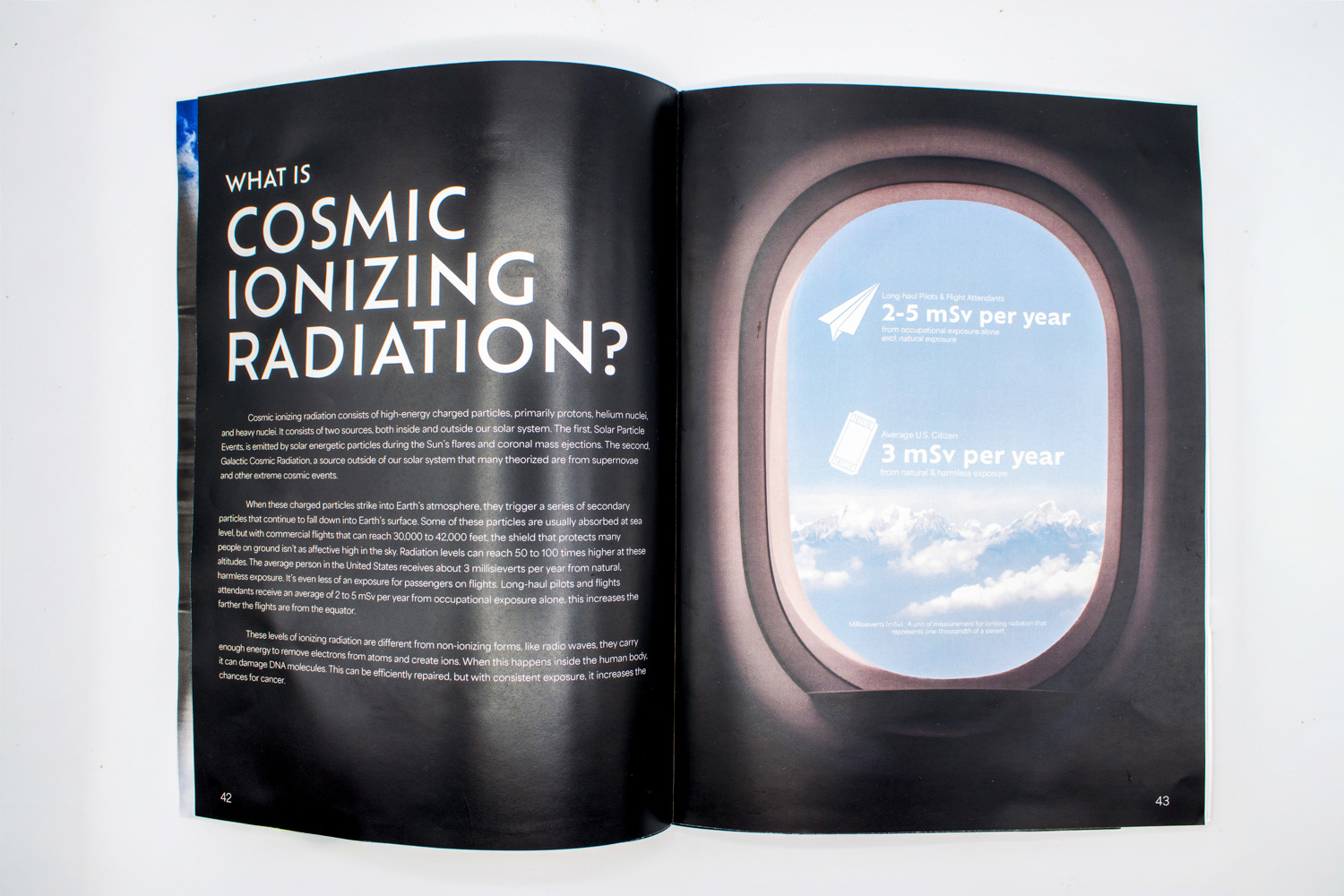
After collecting data and gaining a better understanding of the impact CIR has on aviation crewmembers, this gave me clear direction for the article and design. Although, the main audience and focus is around aircraft crews, I also wanted to include general audience statistics and visuals. It allowed me to compare and contrast the two data sets, while also reassuring and minimizing any fear mongering.
Design Aspects
Typefaces and Color Palette
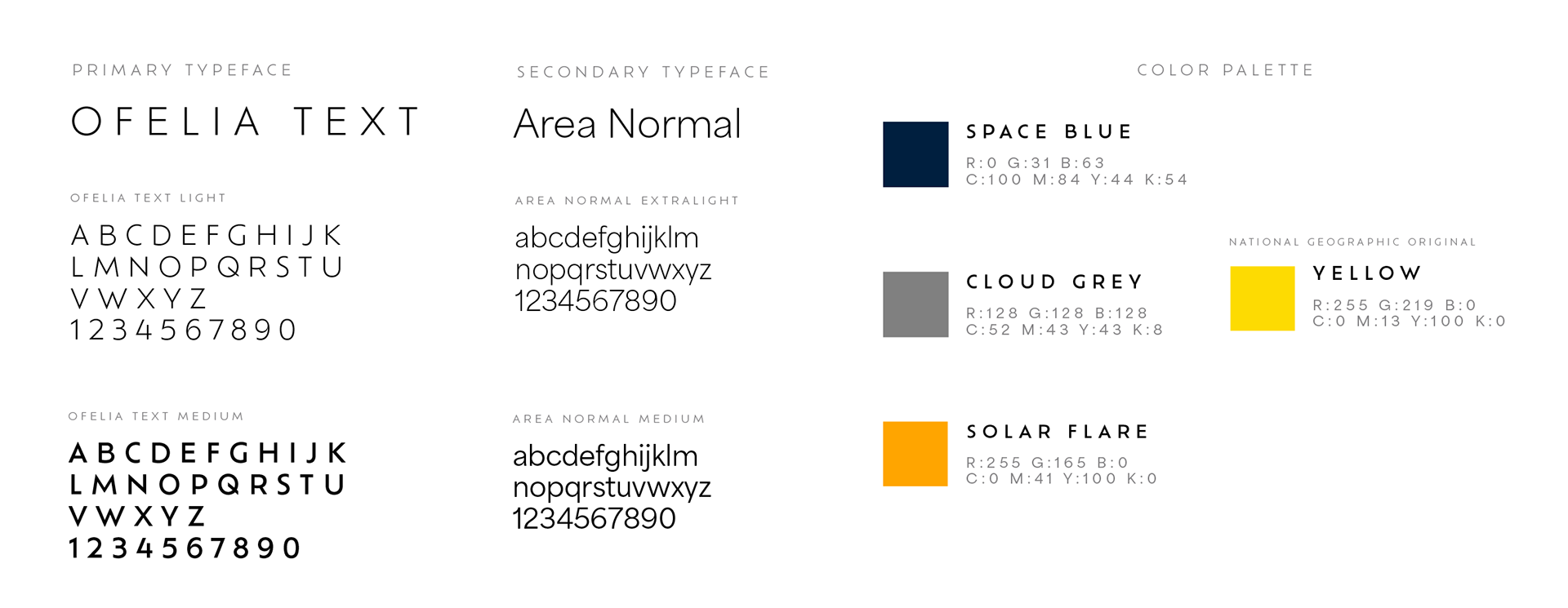
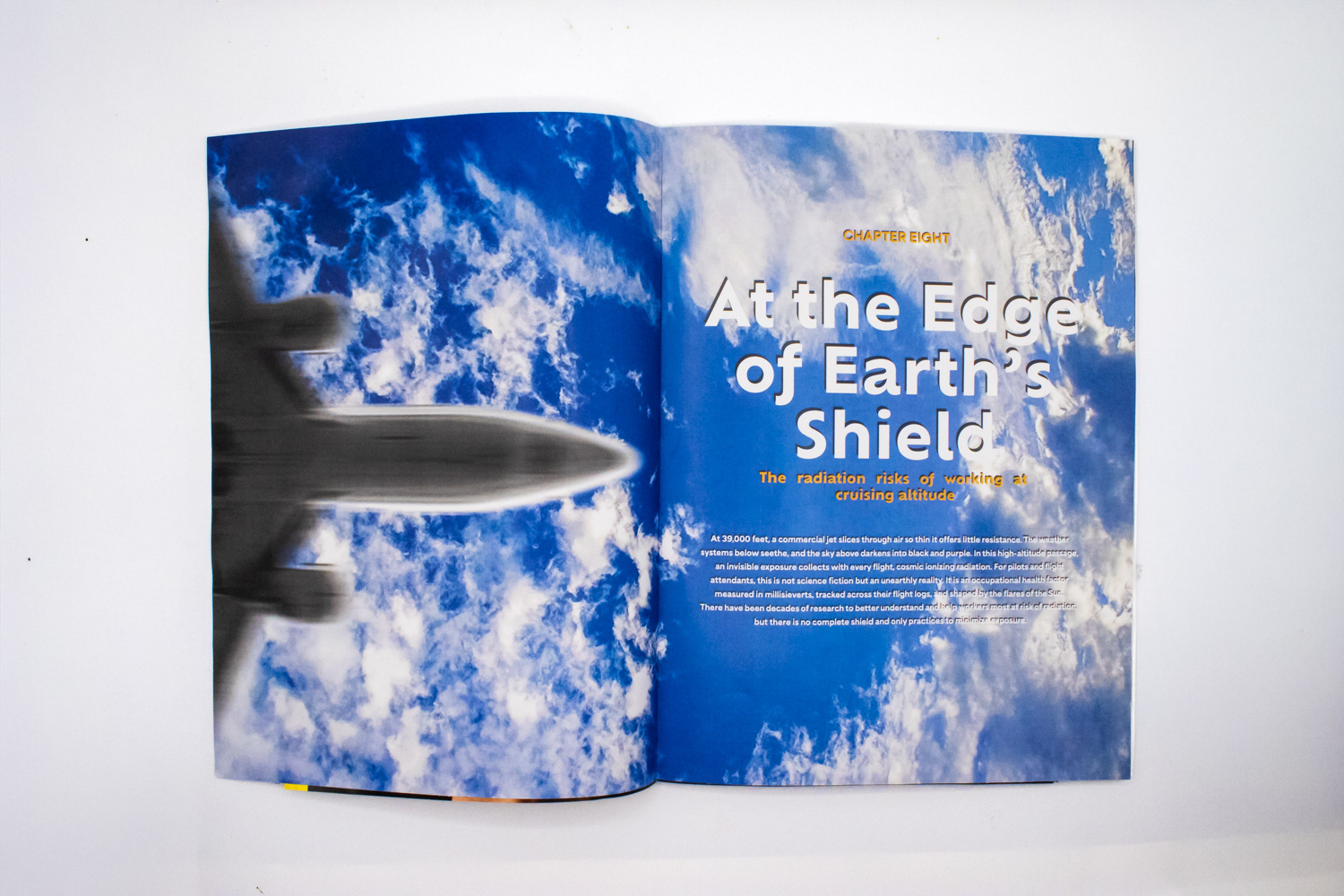
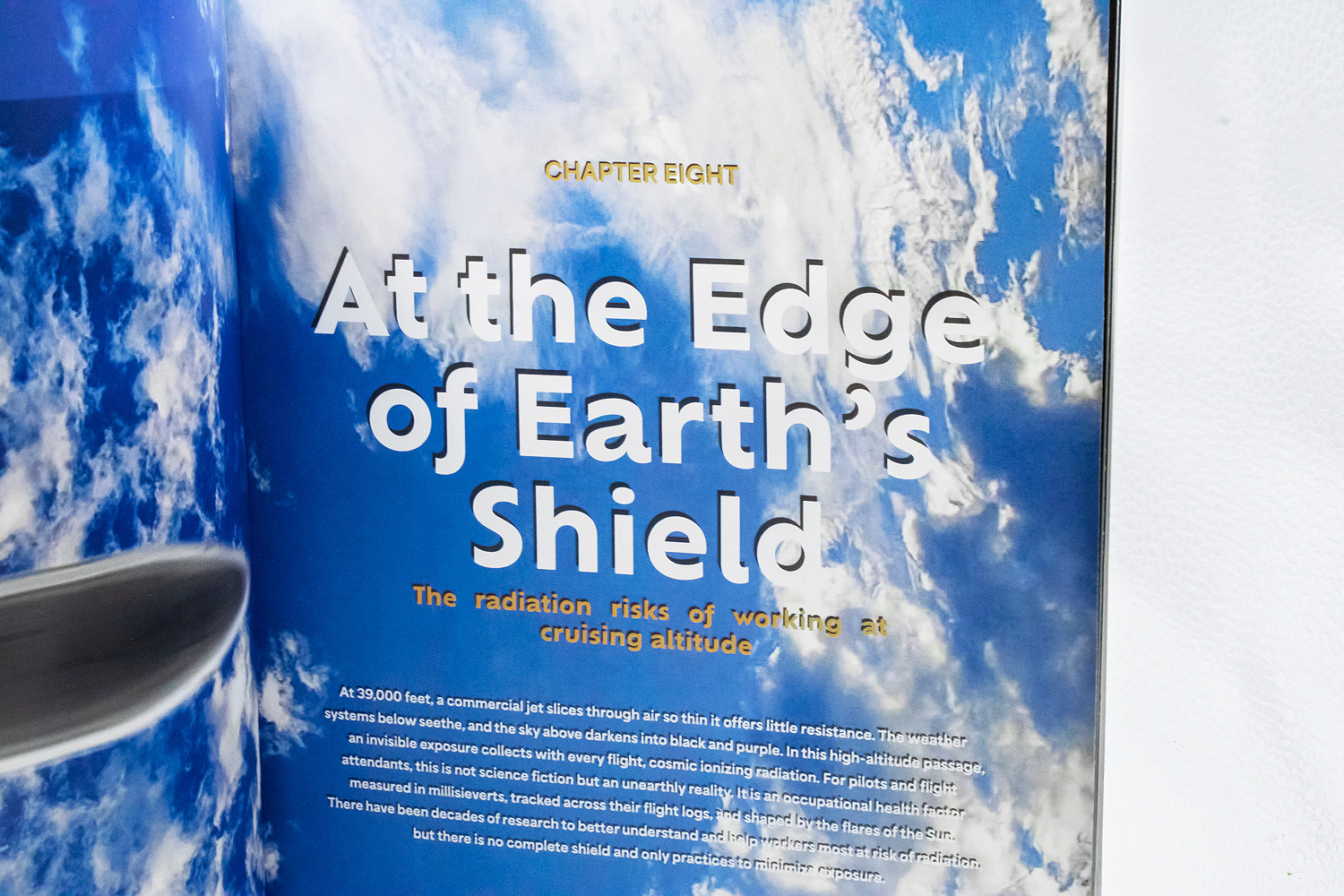
When it came to choosing typefaces and color palettes, one thing that I wanted to keep in mind was how it would all look in the actual National Geographic magazine. I wanted to be as accurate as possible with my typefaces, font choices, and color choices. When that wasn't possible, I decided to get as close as I could to the original, which helped me visualize the graphics at times, but also greatly limited me. By following their color palette closely and using close alternatives, it allowed the magazine to properly fit into the style of the magazine, but also gave me enough creative freedom to incorporate my own style.
Grid

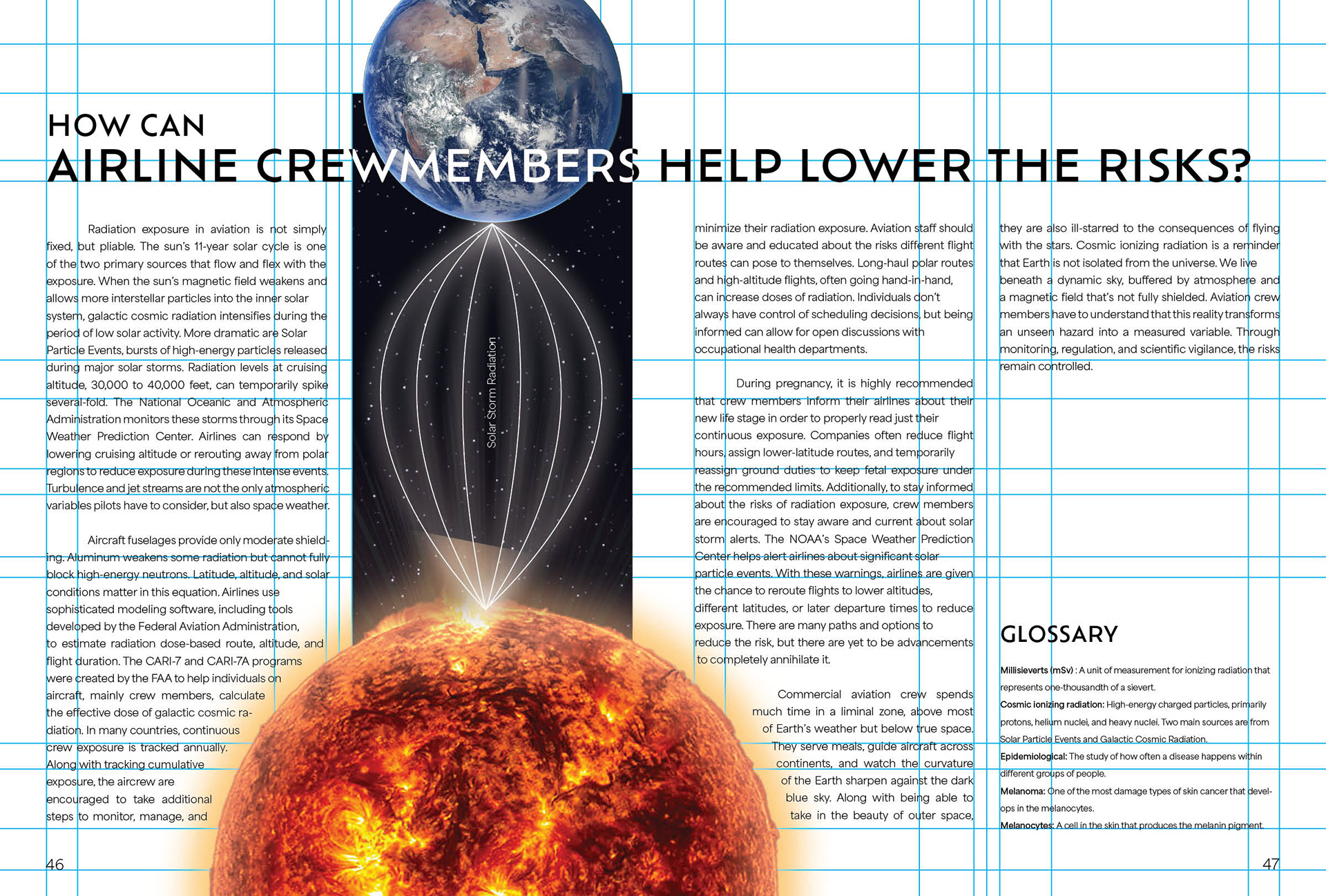
The grid was probably one of the few design assets that had the most work put into it, physically and digitally. Because of it's strict format and usage, it allowed me to intertwine different graphics and texts to properly to provide a good flow of information. I believe it was used in a good balance of structure and dynamics.
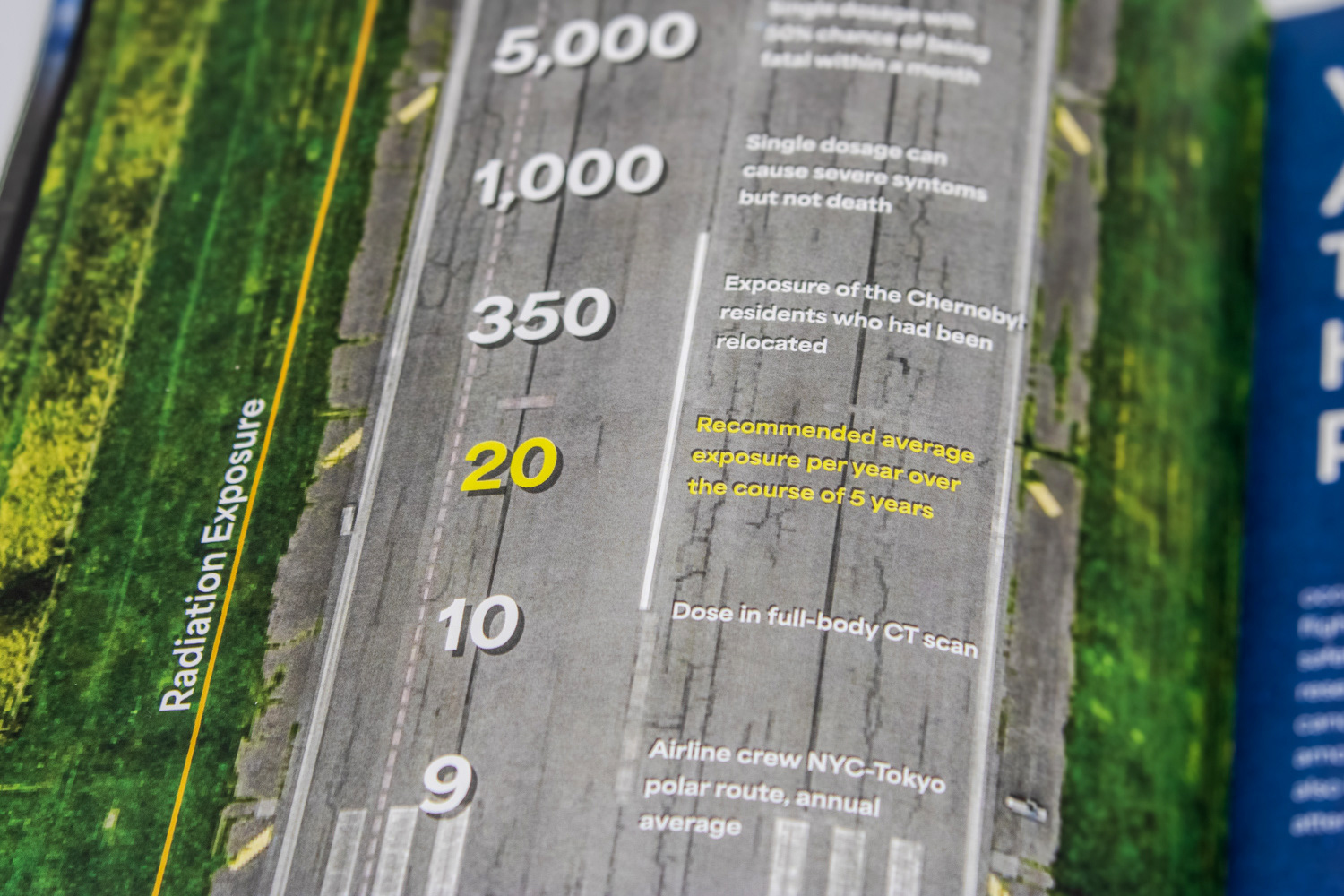
The Ionic Yellow
Taking note of the original palette and wanting to pay homage to National Geographic, I used their ionic color outside their normal design style around different elements and text to highlight important information.
Design Process
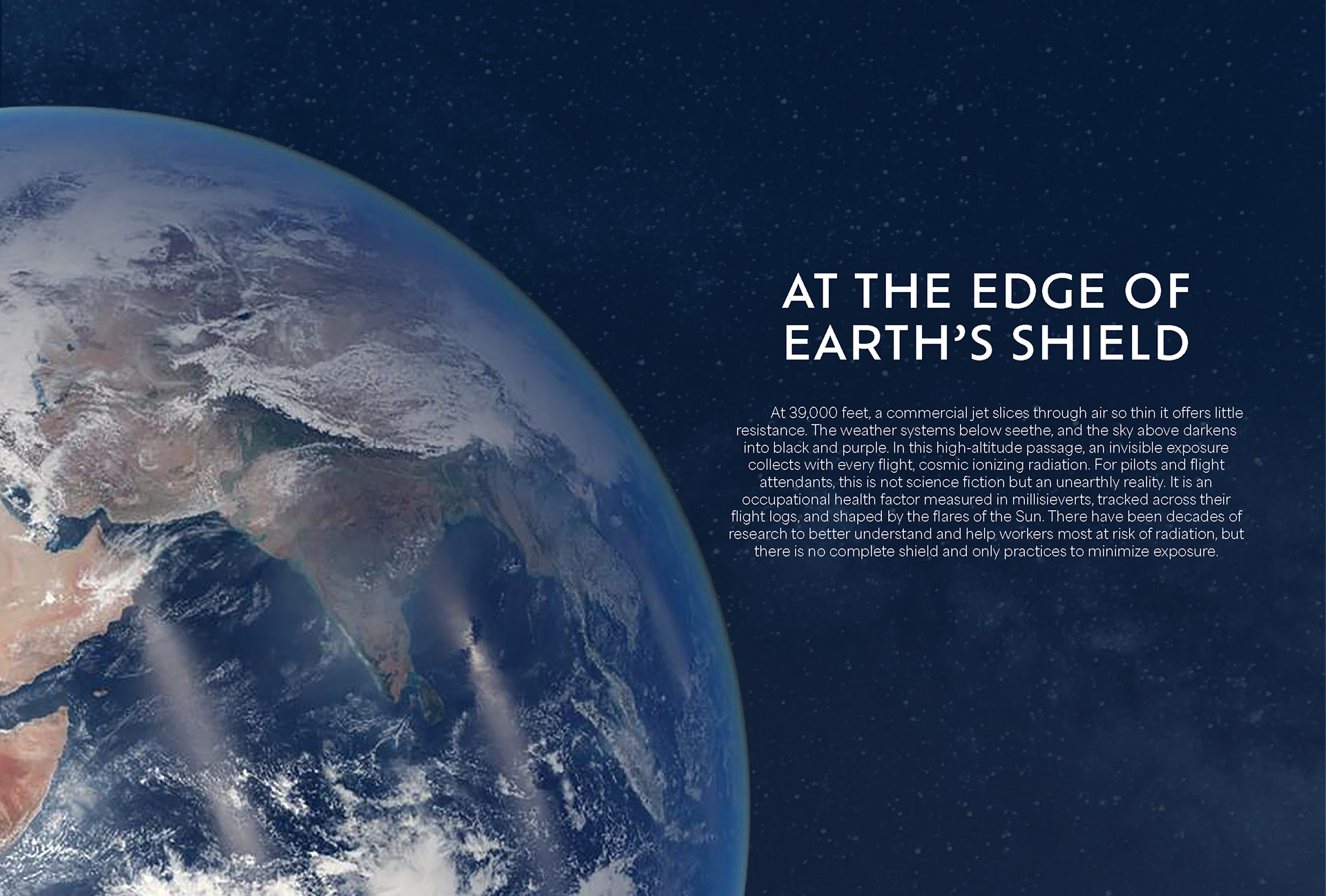
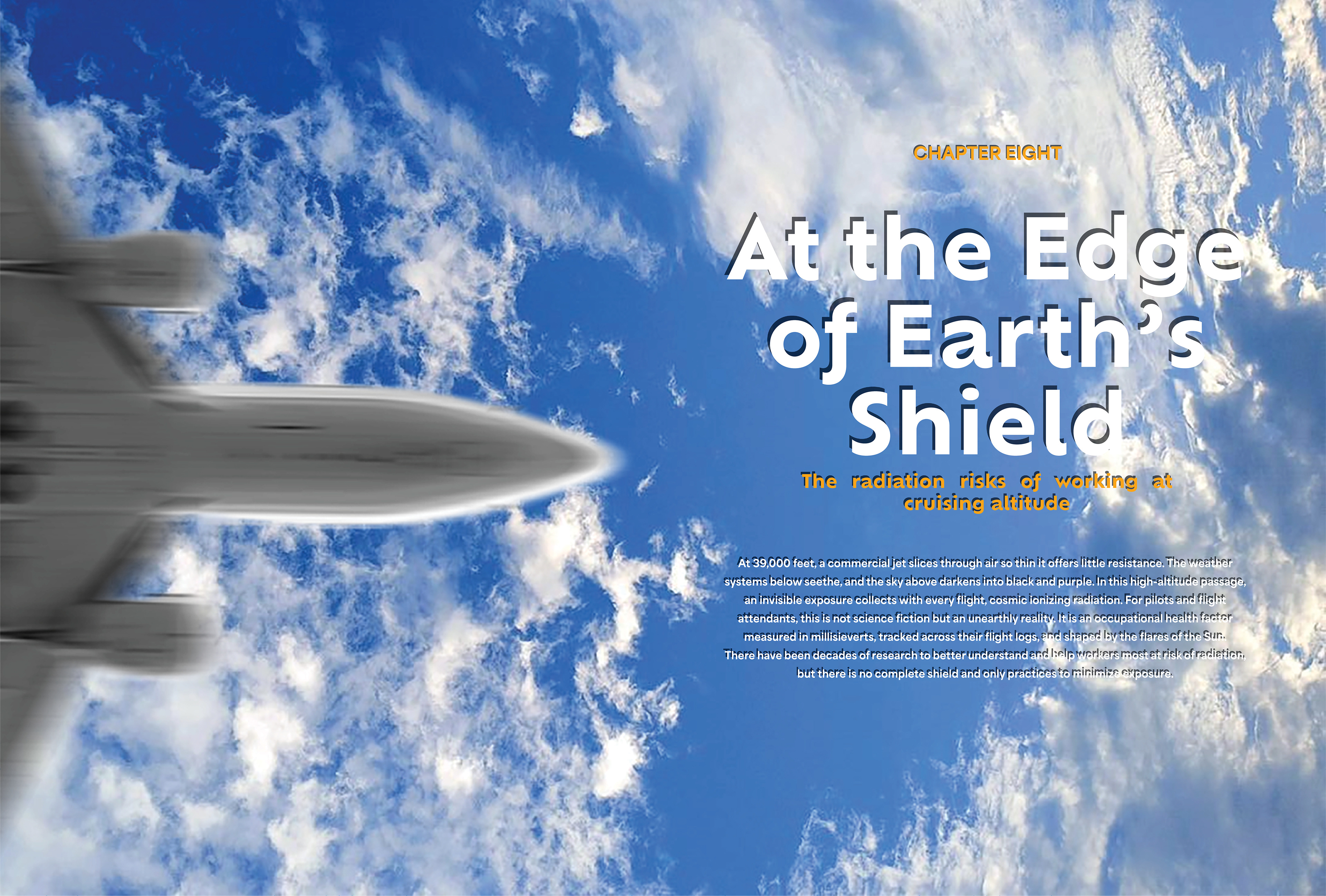
Staying on Topic
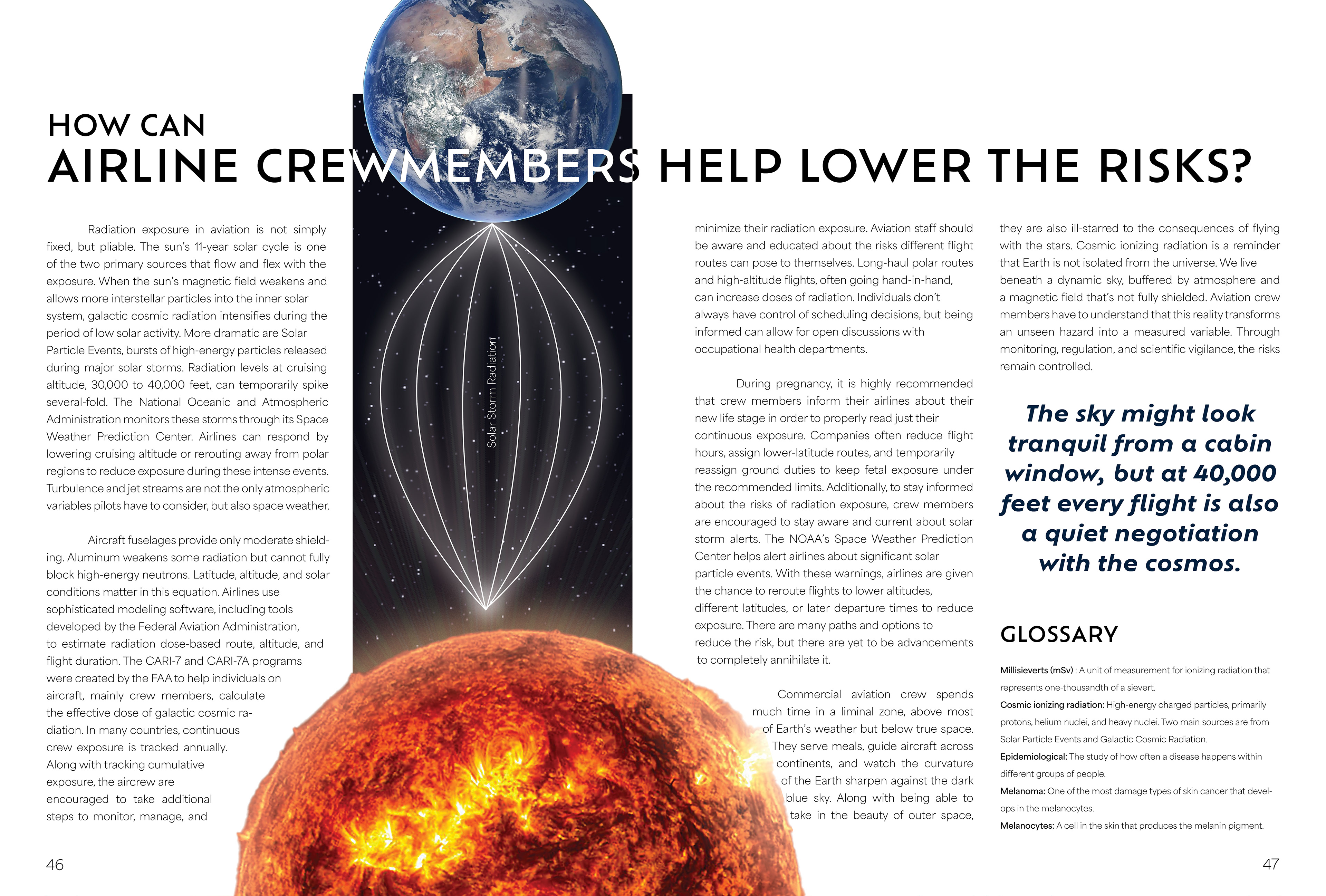
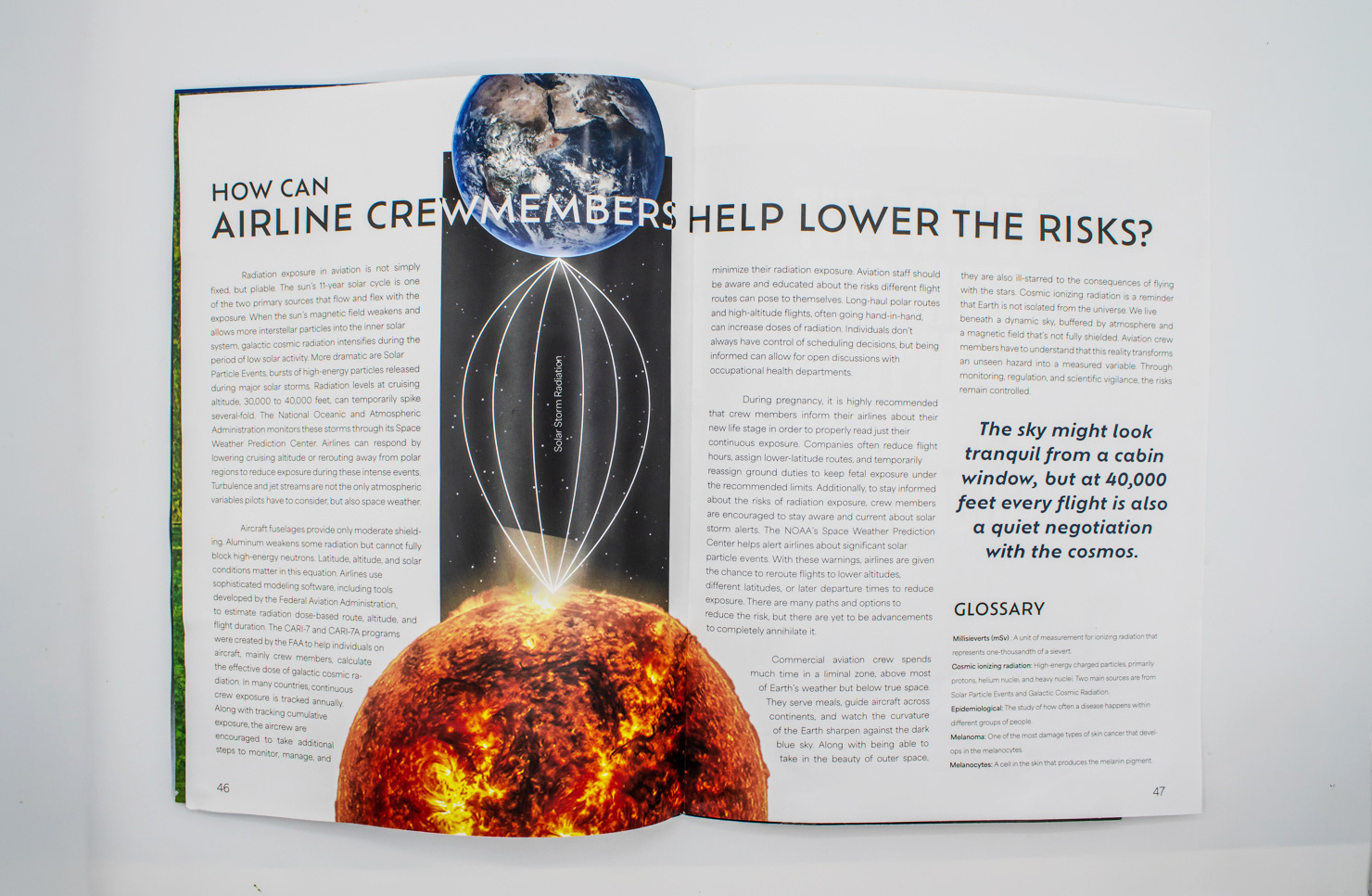
On the first draft of my title page (and essentially the rest of my pages), I focused on the outer space aspect of CIR. I placed the magazine and its audience in space and focused on the main components of radiation, the Sun, Supernovas, and the Earth. I think still wanted to include my original topic (Radiation on Astronauts), but in the end understood to bring aviation as the focal point in both my article and design process.
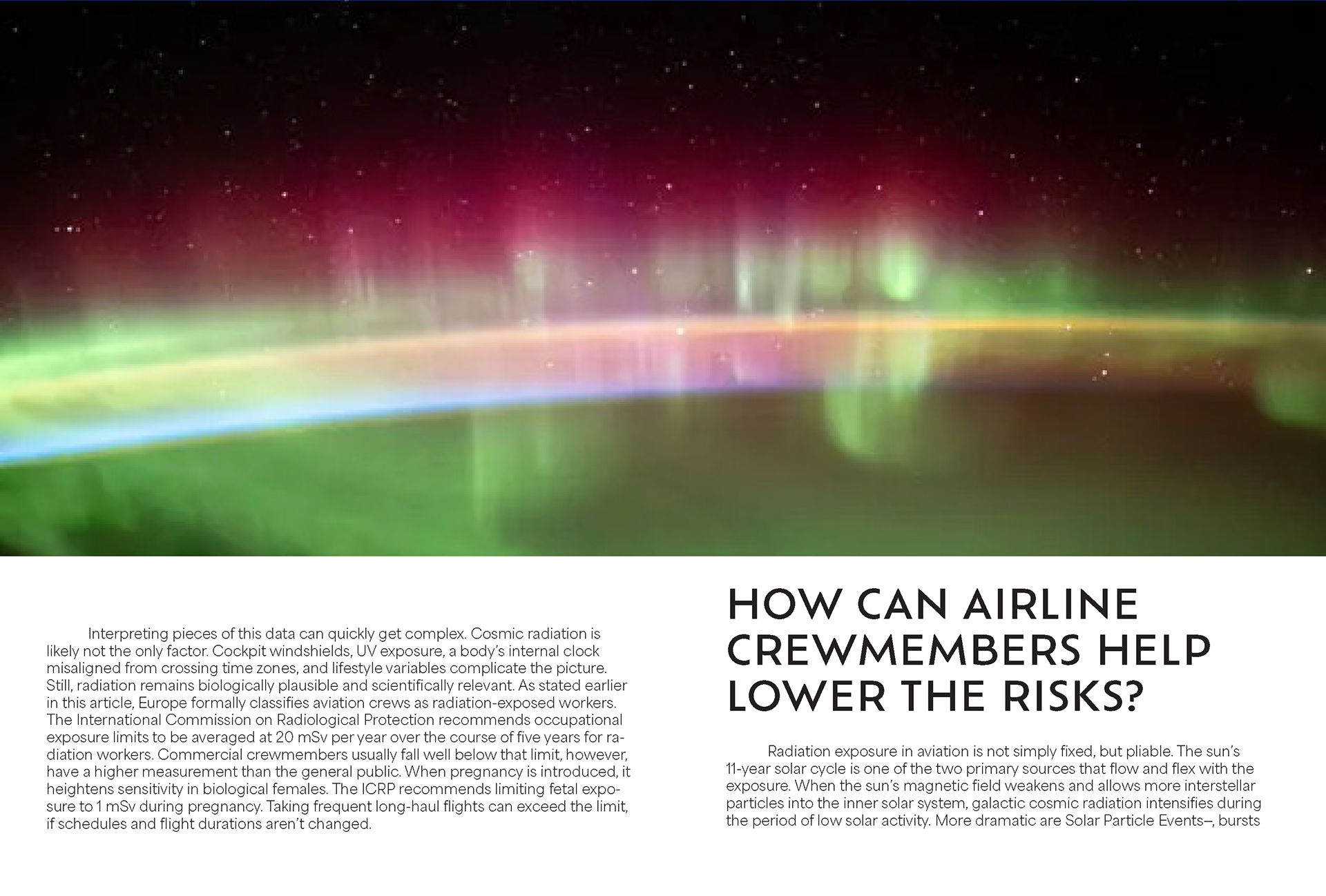
Formatting and Structure
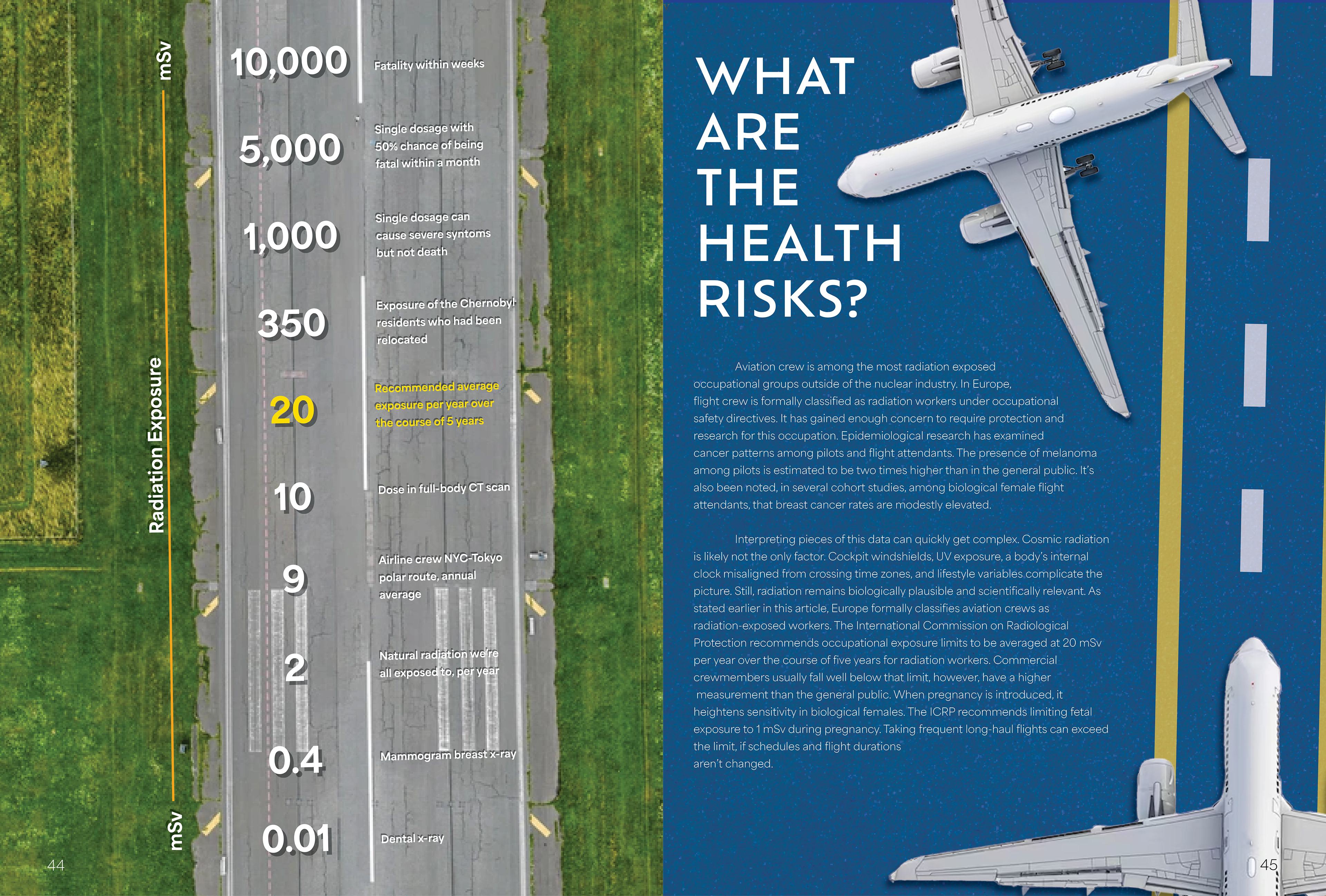
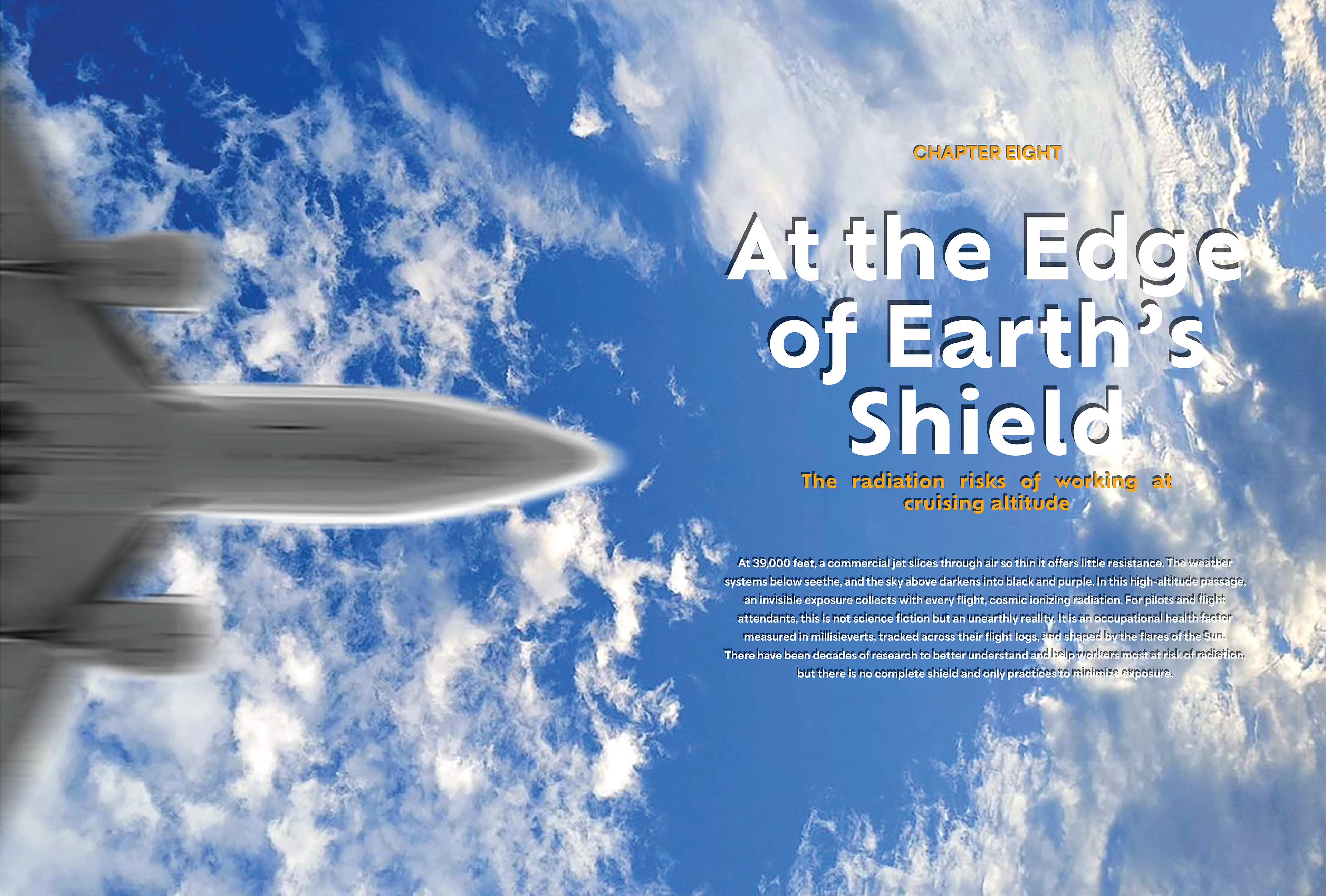
Another large change that happened after first drafts and review was the formatting of the magazine. I essentially wanted to strictly follow the design guidelines from the National Geographic magazine; how text was sized and structured, how images were places, and their treatment. After reviews of my first draft, I was encouraged to use the grid more freely and creatively. An important lesson learned was deciding which original design elements needed to be followed strictly, and which could be taken loosely.
Final Outcome
Digital Magazine
Mockup Photographs
Self Reflections
One insight that has stuck with me is how interwoven everything within a magazine truly is. From the research readings, initial writings, and designing aspects, everything must combine, or it will create the delicate balance of the magazine structure. It's shown me that every decision is much more personal and meaningful, even as small as a formation. It's a complicated structure, but a satisfying one when it's been completed. Although this part of the industry wasn't something I thought of taking a step in, it's helped me understand a new perspective of design and how the profession umbrellas many jobs.